
AI powered
Accessibility widget
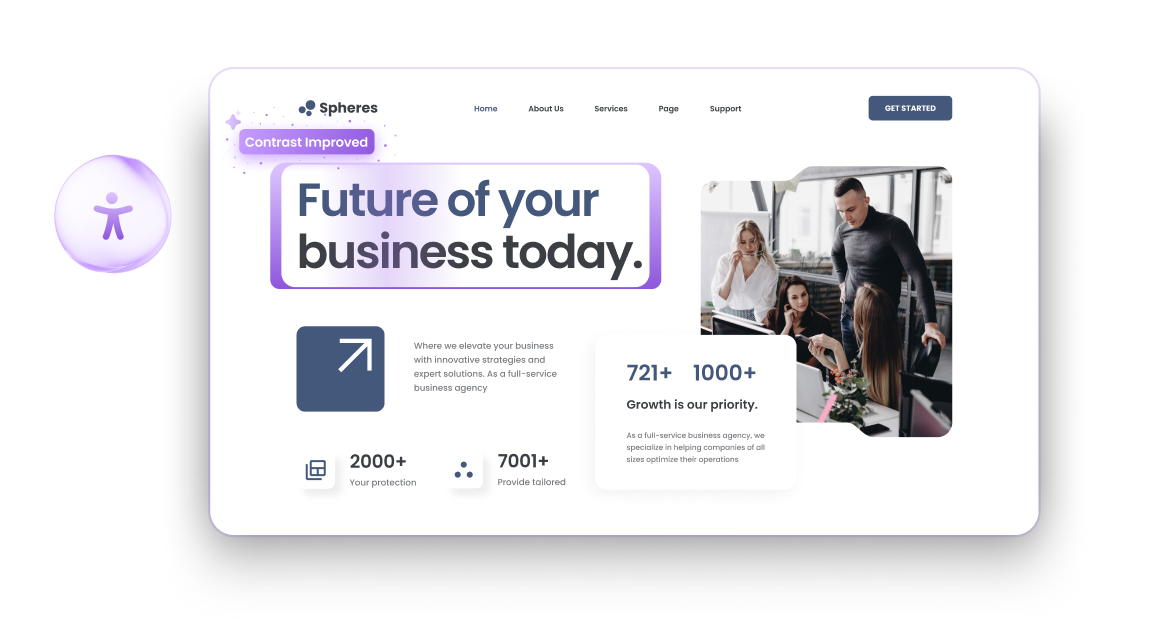
Enhance web accessibility with keyboard navigation, contrast settings, text controls, and screen reader compatibility.
Learn moreFrom automated tools to expert audits, tabnav helps you test, fix, and maintain an accessible website.






Trusted by leading brands

Our accessibility scan delivers detailed findings, allowing teams to fix issues or rely on our experts for remediation.
Accurate accessibility tests with clear ADA/WCAG direction to keep your website compliant.
Automated tools and AI accessibility widget that improve usability for every visitor.
Get expert manual reviews and continuous support to help you resolve issues.

It feels like having a specialist on your team - without the high cost.
End-to-end solutions
Designed to support any workflow and keep your website aligned with WCAG, ADA, and EAA standards from end to end.
AI powered
Enhance web accessibility with keyboard navigation, contrast settings, text controls, and screen reader compatibility.
Learn moreInstant scan
Test any page for WCAG, ADA, and EAA issues and get clear, actionable guidance to fix them fast.
Learn moreFull-site tracking
Scan your entire website, schedule recurring checks, and collaborate with your team in one accessibility dashboard.
Learn moreOne-click fix
Upload any PDF and let tabnav AI remediate it, run an accessibility check, and deliver a post-remediation report.
Learn moreFree forever
Access free tools that help you check accessibility, improve contrast, monitor issues, and add assistive features to your website.
Add our free accessibility widget with text, contrast, and keyboard tools.
Track accessibility over time. Assign fixes, collaborate with your team.
Free accessibility test. Detect WCAG 2.2 issues with clear fixes.

Check if text on your image meets WCAG contrast.

Check if your link colors have enough contrast to be easily identified.
Check if your text has enough contrast and meets WCAG.
Why accessibility
We provide complete web accessibility services that aren't just about compliance-they remove barriers, empower people with disabilities, and create digital experiences everyone can use with confidence.

Inclusive design ensures all users can read, navigate, and engage with your website confidently and without obstacles.
Accessible websites improve brand visibility, helping your content rank higher and appear in more search and AI driven results.

Accessibility opens your website to more people, helping every user interact with your content without barriers.

Meeting ADA and WCAG standards helps reduce risk and keeps your website aligned with global accessibility laws.

Accessible pages improve clarity and make navigation easier for every visitor across all devices and abilities.

Accessible websites show users you value everyone, creating confidence, reliability, and a stronger connection with your audience.
End-to-end accessibility packages
Automated fixes, design-friendly controls, and continuous improvements
Instant checks for ADA, WCAG, and EAA compliance standards.
Manual audits, remediation services, and tailored accessibility projects for unique requirements.
Let's Talk!Built to meet WCAG, ADA, EAA, and international standards.


Accessibility guidelines
Created by the W3C, the Web Content Accessibility Guidelines explain how to make web content accessible for people with disabilities. WCAG 2.2, released in October 2023, adds new success criteria that improve accessibility for users with cognitive, learning, vision, and mobile needs.
Read moreIntroduces nine new success criteria (focus visibility, target size, authentication support) and removes success criterion 4.1.1 Parsing.
The Americans with Disabilities Act (ADA) bans discrimination based on disability. Under Title III, businesses and organizations offering public services - including websites and digital platforms - must provide accessible experiences for people with disabilities, aligned with WCAG Level AA requirements.
Read moreIn April 2024, the U.S. Department of Justice released its final rule under Title II, requiring government websites and apps to meet WCAG 2.1 AA, establishing a new standard for ADA-related digital compliance.
The EAA requires that websites, e-commerce services, mobile applications, and digital products remain accessible throughout all EU member states. It follows EN 301 549 and WCAG 2.1 Level AA as its core standards.
Read moreEU countries must apply the EAA by June 2025 to unify accessibility expectations for web and digital services across Europe.
The AODA requires organizations in Ontario to make their websites and online content accessible to people with disabilities. The law is based on WCAG 2.0 Level AA and encourages adoption of improvements introduced in WCAG 2.2.
Read moreOntario continues enforcing WCAG 2.0 AA while guiding organizations to move toward WCAG 2.2 by 2027 as part of its broader digital accessibility modernization.
Section 508 of the Rehabilitation Act requires all electronic and information technology used by federal agencies - including websites, software, and documents - to be accessible to people with disabilities. The law adopts WCAG 2.0 Level AA as its technical benchmark.
Read moreThe “508 Refresh” (effective 2018) aligned requirements with WCAG 2.0. In 2023, new federal guidance clarified ongoing digital accessibility management for websites and online services.
BITV (Barrierefreie-Informationstechnik-Verordnung) sets accessibility standards for public-sector websites and mobile apps in Germany. It follows the EU Web Accessibility Directive and aligns with WCAG 2.1 Level AA.
Read moreBITV 2.0 took effect in 2019, bringing Germany's national accessibility rules in line with EN 301 549 and WCAG 2.1.
AGID - the Agenzia per l'Italia Digitale - oversees and regulates digital accessibility for public-sector websites and mobile apps in Italy. Its requirements are set by the Legge Stanca (Law No. 4/2004) and aligned with WCAG 2.1 Level AA through the EU Web Accessibility Directive.
Read moreIn 2022, AGID updated its technical accessibility standards to match WCAG 2.1 AA and introduced enhanced monitoring and reporting duties for public-sector sites and apps. Annual compliance declarations are now required through the AGID platform.
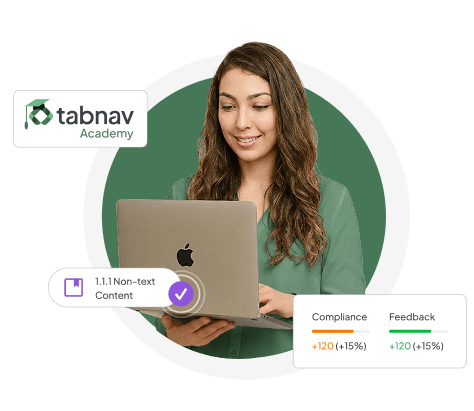
Clear explanations and actionable guidance for meeting accessibility standards.
Helpful side-by-side examples to understand correct vs. incorrect patterns.
Practical demonstrations of accessibility issues and how to fix them.
Tabnav Blog